Community & Events
Lake Shore Garden Club's Free Flower Show Returns to Henn Mansion This Weekend
The volunteer-run club held its free, bee-themed show Aug. 14–15 with judged horticulture and design exhibits open to all at no cost.
By Staff · August 20, 2026
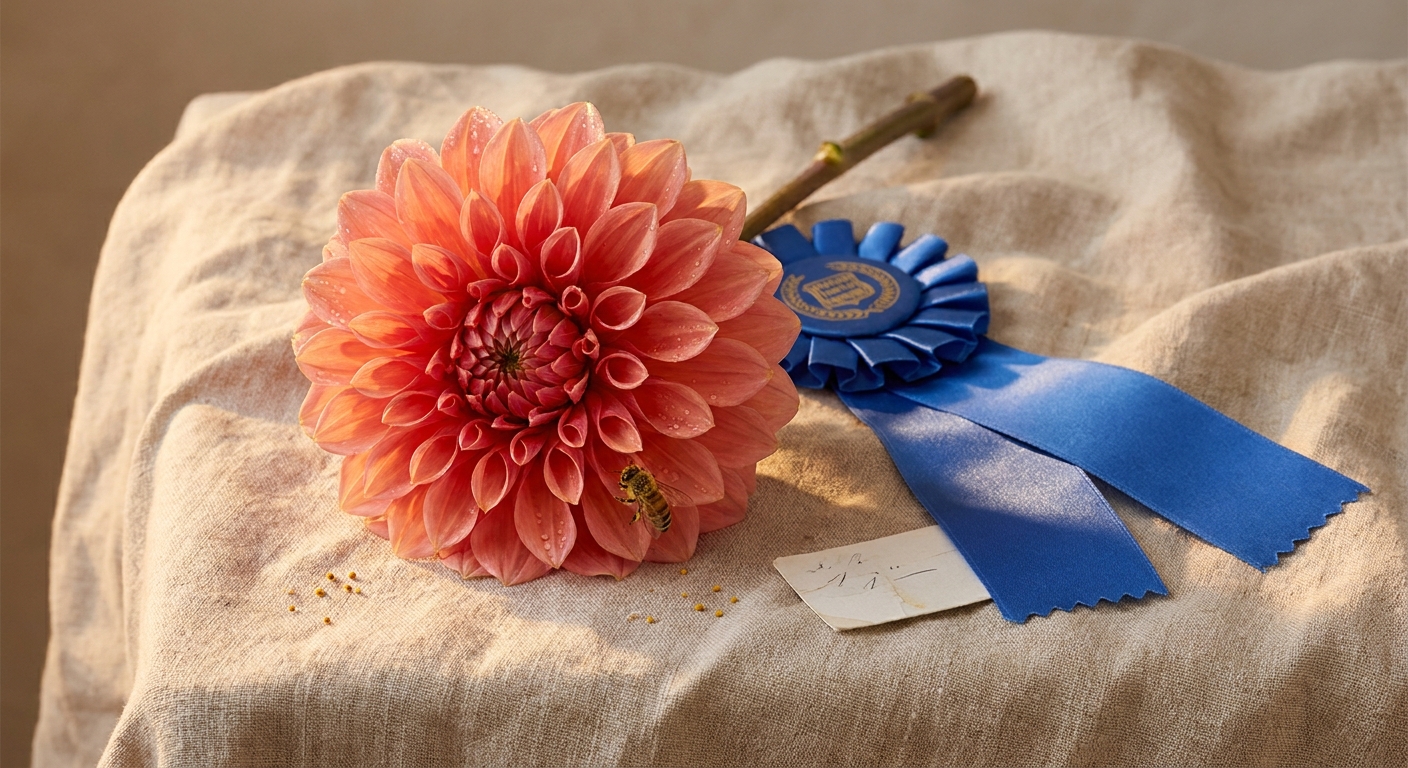
For two August afternoons, Euclid residents could step into the Albert W. Henn Mansion, look over neighbors' flowers and garden designs, and leave without paying admission or joining anything.
The Lake Shore Garden Club's "Bee Happy in the Garden" flower show brought floral displays, horticulture exhibits and creative designs to the mansion last weekend, Aug. 14–15, 2026. Visitors could walk in Friday from 1 to 5 p.m. and Saturday from noon to 4 p.m., with no admission charge and no membership requirement.
At a time when so many community activities come with a ticket price or a membership list, the club offered a longstanding Euclid tradition with a lower bar to entry: Walk through the door, look around and enjoy.
The bee-centered theme connected flower-show competition with pollinator awareness. Organized as a National Garden Clubs Small Standard Flower Show, "Bee Happy in the Garden" included divisions for horticulture and design.
The competition itself is far from casual. Horticulture entries are judged on plant quality and identification, along with maturity, color, form, condition, grooming and staging. Blue ribbons go to entries scoring 90 or higher, red ribbons recognize scores of at least 85, yellow ribbons recognize scores of at least 80 and white ribbons recognize scores of at least 75.
Those standards give volunteer growers' work public recognition, but the show also leaves room for the neighbor who comes simply to admire a bloom, pick up an idea or spend an afternoon in a beautiful old house by the lake.
The Lake Shore Garden Club is entirely volunteer-run. Its mission includes studying flower propagation and culture, developing home gardens, protecting native trees, flowers and birds, and building fellowship among members. The flower show is one part of that work, alongside monthly gardening programs, social events, a spring garden tour and an annual fundraising plant sale.
The club carries forward a public exhibition tradition that stretches back decades. Beginning in 1941, members were asked to exhibit at least three flower arrangements each year, and a judged Flower Show and Garden Tour took place in 1980. The club is a member of the Cleveland District of the Garden Club of Ohio.
That history fits within a broader regional tradition of connecting horticulture with public life. The Garden Club of Cleveland, founded in 1912, linked gardening with civic beauty and betterment in and around Cleveland. Euclid remains a center for statewide garden-club activity as the home of the Garden Club of Ohio at 170 East 194th Street.
The setting made the weekend's event mean more than a pleasant display of flowers. Built in 1923 as the private residence of industrialist Albert W. Henn and his wife Gertrude, the Tudor Revival mansion was designed by architect Earl J. Andrews. Henn made his fortune in the machine tool industry and lost it during the Great Depression; the property was turned over to the City of Euclid on the condition that he could live there until his death in 1947.
Listed on the National Register of Historic Places in 2000, the mansion now stands in Sims Park on the lakefront at 23131 Lake Shore Boulevard. It previously housed Euclid's Recreation Department after other municipal uses. Today it is available as a public event venue for meetings, seminars, weddings, family reunions and other gatherings, with capacity for up to 80 guests. Euclid held a public meeting there in 2025 on the Sims Park reimagining project.
A historic public property has to stay active to remain useful, but it loses something if residents can experience it only through rentals or paid events. The flower show made room for another kind of gathering — a neighborhood event centered on gardens, creativity and participation, where any neighbor could walk in.
The mansion survives because community members decided it was worth defending. In a working suburb where public amenities often require fees or memberships, the Lake Shore Garden Club's free flower show embodies a model of civic engagement that is increasingly rare: volunteer labor, open access and pride in local culture sustained year after year.
For Euclid, the significance of "Bee Happy in the Garden" was in the open door as much as the flowers. Volunteers kept a public tradition alive in a mansion saved by residents' own action, and for one weekend the result was visible in every exhibit and every visitor who came in simply to look.