Local News
Fracking Permits Active in Euclid's Watershed — But Who's Watching What Reaches the Intake Pipe?
Active fracking permits in Cuyahoga and Lake counties sit inside the same watershed feeding Euclid's tap water, raising questions about monitoring gaps.
By Staff · September 3, 2026
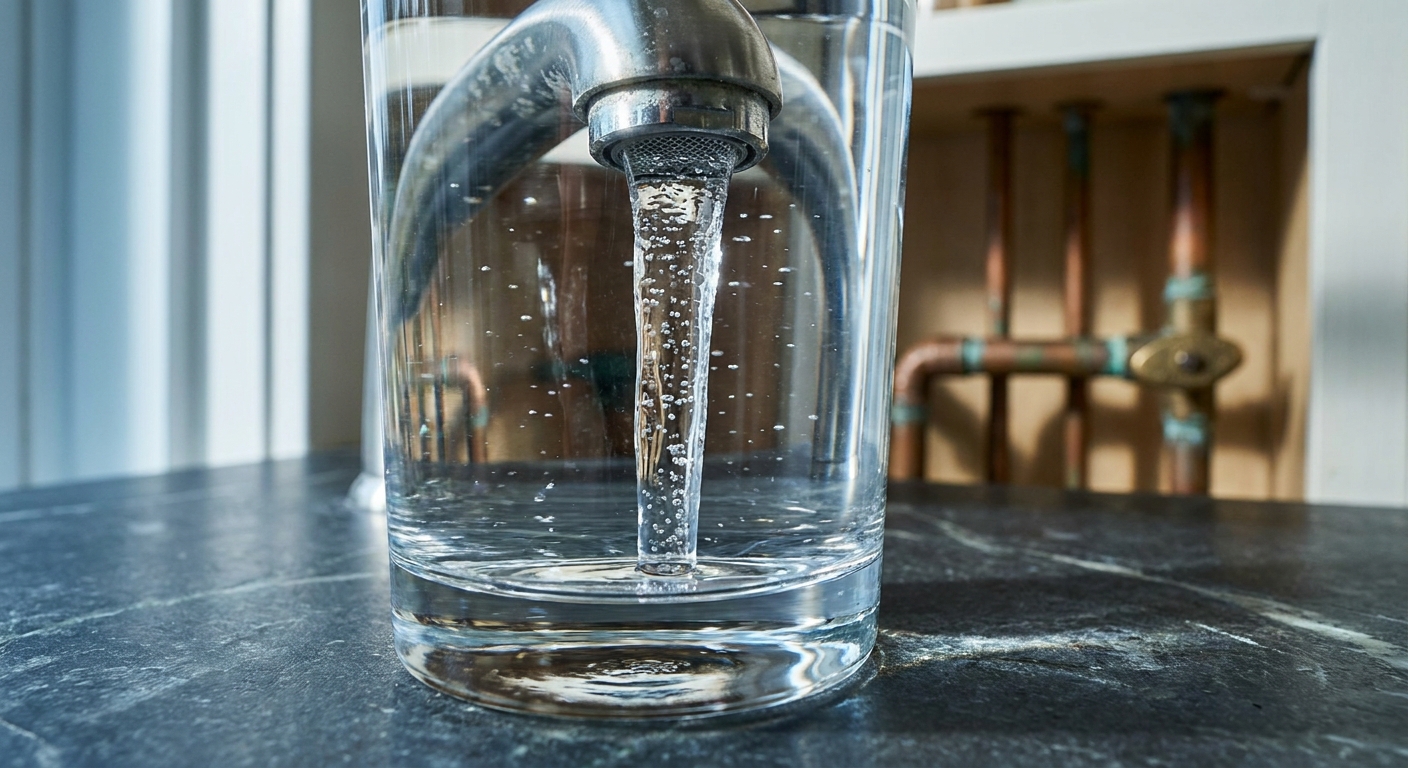
Every glass of water poured in a Euclid kitchen starts in Lake Erie. The Cleveland Water Department draws from four intakes in the lake's Central Basin, treats what it pulls in, and sends it to taps across the region — including every home and business in our city.
Last fall, state regulators approved fracking permits in Cuyahoga County, where Euclid is located, and neighboring Lake County, which both sit inside the Lake Erie watershed. On September 5, 2025, the Ohio Department of Natural Resources greenlit the Concordia Lutheran Church 1-D well in Cuyahoga County, operated by Pin Oak Energy Partners LLC. Four days later, it approved the Walrath Unit #1 well in Lake County, operated by Hidden Village Estates Ltd. Geauga County also falls within the Lake Erie watershed and is subject to the same state water-withdrawal rules when projects hit regulatory thresholds.
That raises a question Euclid families deserve a straight answer to: who is testing the water you give your kids, and what happens if something goes wrong?
What's being tested — and what isn't
Cleveland Water reports monitoring for more than 200 regulated and unregulated contaminants, performing 160,000 tests a year across its plants, continuously tracking more than 20,000 treatment-process parameters, and collecting over 350 distribution-system samples each month. The utility has added real-time buoys that measure temperature, pH, turbidity, and dissolved oxygen in the lake, giving staff an early look at changing source-water conditions before intake water reaches a treatment plant.
The utility's 2022 and 2021 water quality reports show testing for xylene, naphthalene, and n-propylbenzene — three compounds tied to petroleum extraction — all reported as not detected. Benzene, another drilling-related chemical, is among Ohio's regulated volatile organic compounds for public drinking water. Cleveland Water says the large majority of the contaminants it monitors are not detected.
But Ohio EPA guidance recommends a broader screen when oil and gas development sits in a water system's watershed: dissolved methane, the full suite of BTEX compounds (benzene, toluene, ethylbenzene, xylene), plus chloride, sodium, barium, strontium, total dissolved solids, pH, and specific conductivity as indicators of possible brine contamination. Whether Cleveland Water currently tests for all of those compounds at its Lake Erie intakes is unclear.
The same gap exists for PFAS, a class of chemicals linked to fracking wastewater. Ohio EPA's new PFAS monitoring rules require community water systems to complete initial testing by April 26, 2027, with results reported to the state and included in Consumer Confidence Reports delivered by July 1, 2027. Surface water systems must collect four quarterly samples within 12 months, two to four months apart, at each entry point to the distribution system. The regulated list includes PFOA, PFOS, PFNA, PFHxS, and HFPO-DA (GenX), along with a hazard index for certain PFAS mixtures; Ohio has also set trigger levels at half the maximum contaminant levels — 2.0 parts per trillion for PFOA and PFOS, 5 ppt for PFNA, PFHxS, and HFPO-DA.
Cleveland Water has monitored cyanotoxins in source and finished water since 2010, and in August 2026 the U.S. EPA research vessel Lake Guardian conducted a month-long Great Lakes survey that included oxygen and temperature profiling in Lake Erie's central basin near Cleveland's intakes.
The setbacks and the blind spots
Ohio's statewide minimum setback for a new oil or gas well is 50 feet from a stream, river, watercourse, water well, pond, lake, or other body of water — and the state's chief can approve an even shorter distance if deemed necessary to reduce impacts or protect public safety. A state permit is required for withdrawals from a Lake Erie watershed river, stream, or groundwater source of at least 1 million gallons per day averaged over 90 days, and Ohio's Great Lakes Compact materials say no permits will be issued to transfer water out of the Lake Erie Basin for oil and gas operations.
The ODNR Oil & Gas Well Database lets anyone search wells by county, township, or operator — but it includes only active wells. That means there is no straightforward public way to determine whether the Cuyahoga and Lake County permits have actually been drilled, how close they sit to tributaries that drain into the lake, or their distance from Euclid's intake.
The state's track record elsewhere illustrates the stakes. In 2026, regulators approved fracking on more than 8,500 acres of public land, including Egypt Valley Wildlife Area in Belmont and Guernsey counties and parcels in Noble and Monroe counties. And a 2026 report documented that brine waste from the Redbird #4 injection well in Washington County has continued migrating into the Berea formation years after a 2020 investigation, contaminating wells more than five miles away and raising concerns that radioactive, PFAS-laden wastewater could reach drinking-water aquifers.
Ohio law requires well construction standards — cemented casings and pressure seals — designed to isolate fluids from groundwater, and defines well integrity as maintaining a structurally sound well that prevents uncontrolled fluid release or migration. Well owners must not let a well leak fluids or gases, and if casing is defective or construction inadequate, they must notify the state within 24 hours.
If something goes wrong
Cleveland Water maintains a contingency plan for operational and security risks, including emergency procurement and alternate water supply sources, according to the utility's award application materials. Ohio rules require public water systems to describe how they will respond to likely emergencies, provide water from an alternate source, supply at least one gallon per person per day within 24 hours if distribution service cannot continue, and notify Ohio EPA within 24 hours of activating the plan.
Standard emergency-response guidance for contamination events calls for identifying the source, isolating or treating it if possible, consulting regulators and law enforcement, increasing disinfection, sampling the system, and issuing public notifications as needed; in some cases the response includes shutting off water until contaminants are identified. Ohio EPA guidance also tells utilities to identify alternate source-water options, including interties with other water agencies and temporary supplies such as water trucks or bottled water.
What's missing from the picture is Euclid's own role. There is no evidence the city maintains independent water-quality testing, emergency response authority, or alternate-source agreements beyond its reliance on Cleveland Water's regional supply and contingency plans.
What residents can do now
Euclid residents can request Cleveland Water's most recent Consumer Confidence Report and ask whether the utility tests for the full suite of Ohio EPA–recommended fracking-related contaminants — dissolved methane, all BTEX compounds, and brine-impact screening parameters such as chloride, barium, strontium, and total dissolved solids. Cleveland Water's general number is (216) 664-2444; its water quality line is (216) 664-2639; and its 24/7 emergency dispatch is (216) 664-3060.
Residents can also bring their questions to City Council or to Mayor Kirsten Holzheimer Gail: Does Euclid have any independent testing capacity? Any emergency response authority of its own? Any alternate-source agreements if Cleveland Water's supply is compromised? Council, led by President Kristian Jarosz, meets the first and third Monday of each month from September through June, and the third Monday in July and August, at 7:00 p.m. in the Council Chambers at the Euclid Municipal Center. The Council Office can be reached at (216) 289-8123. Martin J. Keane, Director of Public Utilities for the City of Cleveland, oversees the department that controls the intake pipes Euclid depends on.
Two fracking permits are approved in the watershed that feeds Euclid's tap water, and the public database cannot tell residents whether those wells have been drilled or how close they sit to the tributaries that flow into Lake Erie. Until someone in authority answers that question — and until Cleveland Water confirms it screens for every contaminant Ohio's own guidance says to look for near oil and gas development — the gap between what's being drilled and what's being tested remains an open one.