Local News
Fracking Permits Are Moving Closer to Lake Erie. Is Anyone Watching Euclid's Water?
A new fracking permit in Erie County is raising questions about whether Cleveland Water's monitoring can protect the Lake Erie intake pipes supplying Euclid's 47,600 residents.
By Staff · September 3, 2026
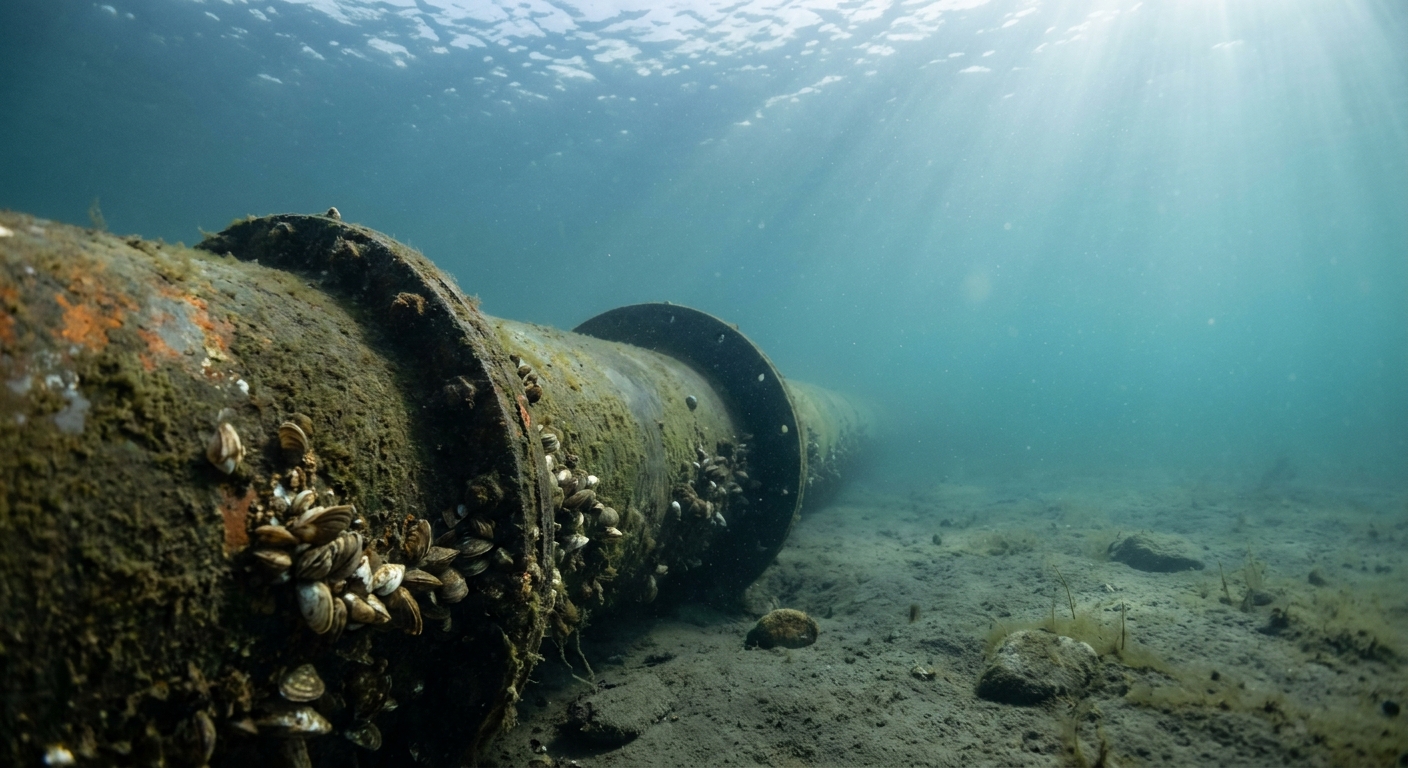
Every glass of tap water poured in Euclid comes from Lake Erie — drawn through intake pipes miles offshore, treated by Cleveland Water, and delivered to roughly 47,600 residents who have no alternative supply. Now, fracking permits in nearby counties are edging closer to the watershed that feeds those pipes, and it is unclear whether the monitoring and contingency systems protecting the city's drinking water have kept pace.
How close is the drilling?
Cuyahoga County, where Euclid is located, along with neighboring Lake and Geauga counties, all sit within the Lake Erie basin. No drilling permits or active operations in those three counties have been documented. But on Feb. 5, 2026, the state approved a permit for an Erie County well called M HUNTER 1, operated by GEOPETRO LLC, an active oil and gas operator with wells and drilling permits in Erie County, including operations on Cleveland Quarries property.
How close that activity has come to the intake pipes feeding Euclid's taps remains an open question.
Cleveland Water operates four intakes in Lake Erie's Central Basin, positioned three to five miles offshore and spread across 15 miles. Its Five Mile Crib intake sits in about 50 feet of water, 3.5 miles from shore. The utility provides direct retail water service to 80 communities across Cuyahoga County and parts of several neighboring counties.
What Cleveland Water tests for — and what it may not
Cleveland Water monitors more than 200 regulated and unregulated contaminants. Its compliance laboratory can analyze for E. coli and total coliform, pesticides, metals, volatile organic compounds, PFAS, asbestos, and Cryptosporidium. The utility's 2023 water quality report lists benzene and toluene among the regulated volatile organic compounds tested; toluene was not detected that year. The system also controls turbidity to the federal standard of 0.3 NTU in 95 percent of samples each month, with no sample above 1 NTU at any treatment plant.
That is a broad testing regime — but it may not cover the full picture. Ohio State and Ohio EPA guidance for private wells near oil and gas development recommends testing for dissolved methane; BTEX compounds (benzene, toluene, xylene, and ethylbenzene); chloride; sodium; barium; bromide; strontium; total dissolved solids; specific conductivity; and pH. State guidance sets action thresholds for dissolved methane at 10 milligrams per liter and 28 milligrams per liter, with levels above 28 mg/L indicating that potentially explosive or flammable quantities may be liberated.
Whether Cleveland Water's monitoring specifically targets the full suite of fracking-related contaminants in that guidance — including dissolved methane and brine indicators like bromide, strontium, xylene, and ethylbenzene beyond the benzene and toluene already reported — remains unclear.
What happens if contamination reaches the intakes
Ohio EPA rules require public water systems to activate their contingency plans, notify the agency, protect public health, and switch to alternate water sources if normal delivery or treatment is compromised. That notification must happen immediately, and no later than 24 hours from the start of the emergency. If water cannot be produced or distributed within 24 hours, systems must provide water through an alternate source procedure, and contingency plans must list at least three possible alternate sources along with a process for obtaining and transporting water from them.
Cleveland Water has a contingency plan prepared under those Ohio EPA requirements, including response protocols for operational and security risks, emergency procurement, and alternate supply sources. The utility also maintains interconnections with other area water systems for emergency use only.
Whether that contingency plan has been tested or updated to address fracking wastewater contamination scenarios remains unknown.
A warning from southern Ohio
What fracking-related contamination looks like when it goes wrong is playing out 200 miles south. Four Class II injection wells in Washington County ceased operations in July 2026 amid concerns that stored wastewater was migrating underground and could contaminate local drinking-water supplies. A Buckeye Environmental Network report alleges that brine waste from the Redbird #4 injection well has migrated underground, contaminating wells more than five miles away and potentially threatening drinking-water aquifers. The New York Times reported that toxic, radioactive fracking wastewater buried beneath Marietta is surfacing and poses a risk to drinking water for roughly 32,000 people. Up to 840,000 gallons of brine per day are permitted to be injected within two miles of Marietta's aquifer, though current municipal tests show no brine contamination yet.
Washington County drains to the Ohio River through the Muskingum River watershed, not to Lake Erie. The contamination there does not flow toward Euclid's supply. But the migration patterns — brine traveling miles beyond the injection point — illustrate the kind of scenario Cleveland Water's contingency plan would need to address if drilling moved closer to the lake.
Regulatory guardrails — and a new law loosening timelines
Ohio's general minimum setback for a new oil or gas well is 50 feet from a lake, stream, river, or other body of water. Before issuing a drilling permit, the Ohio Department of Natural Resources must review site-specific conditions if a proposed well is in a 100-year floodplain or within the five-year time of travel of a public drinking-water supply.
The state prohibits new or increased diversions of water out of the Lake Erie basin and requires permits for certain large withdrawals or consumptive uses within the watershed — specifically, any new or increased withdrawal or consumptive use from a river, stream, or groundwater averaging at least 1 million gallons per day over any 90-day period. Ohio says no permits will be issued for transferring water out of the basin for oil and gas operations because the Great Lakes Compact prohibits such diversions.
On June 25, 2026, Gov. Mike DeWine signed Senate Bill 219, which overhauls timelines and procedures for drilling and plugging permits and takes effect Sept. 23, 2026. The law includes an expedited permit process capped at 10 applications per year and sets new timelines for state land leasing approvals.
The local officials who should be asking questions
In Euclid, Council member John M. Wojtila chairs the Public Services, Facilities & Utilities Committee. Lee Bock serves as director of public service, and Joe O'Donnell is manager of public works.
Whether any of them — or anyone on Euclid City Council — has asked Cleveland Water for information about fracking-specific monitoring protocols or contingency-plan updates remains unclear. Whether the city is advocating for stronger watershed protections or enhanced testing in light of fracking activity documented in Ohio's portion of the Lake Erie basin is also unclear.
What residents can do
Euclid City Council meets on the first and third Monday of each month from September through June, and the third Monday of July and August, at 7 p.m. in the Council Chambers at the Euclid Municipal Center. Council can be reached at (216) 289-8123. O'Donnell can be reached at 216-289-2700, ext. 8671.
For water emergencies, (216) 664-3060.
Here is what to ask:
Ask Cleveland Water whether the Division tests for the full suite of fracking-related contaminants recommended by Ohio EPA and Ohio State guidance for areas near oil and gas development — including dissolved methane, bromide, strontium, and BTEX compounds beyond benzene and toluene — and whether its contingency plan has been tested or updated to address fracking contamination scenarios. Ask what the notification timeline would be if contamination were detected at the intake facilities.
Ask Euclid's Public Services Committee whether the city is monitoring fracking permit applications in Cuyahoga, Lake, and Geauga counties within the Lake Erie watershed and advocating with Cleveland Water for enhanced testing protocols.
Ask city officials whether Euclid has requested information from Cleveland Water about how close current or proposed fracking operations are to the intake pipes that supply the city's drinking water.
Euclid's 47,600 residents drink Lake Erie water every day. The question they are owed an answer to: Have the agencies responsible for that water tested their plans against the risks that are already moving closer?