Local News
Ohio Opens $120 Million in Brownfield Grants—Can Euclid Compete for Contaminated-Site Cleanup?
Applications for Ohio's brownfield grants close Sept. 11, giving Euclid a narrow window to seek funds for cleaning up contaminated industrial parcels blocking lakefront access.
By Staff · August 28, 2026
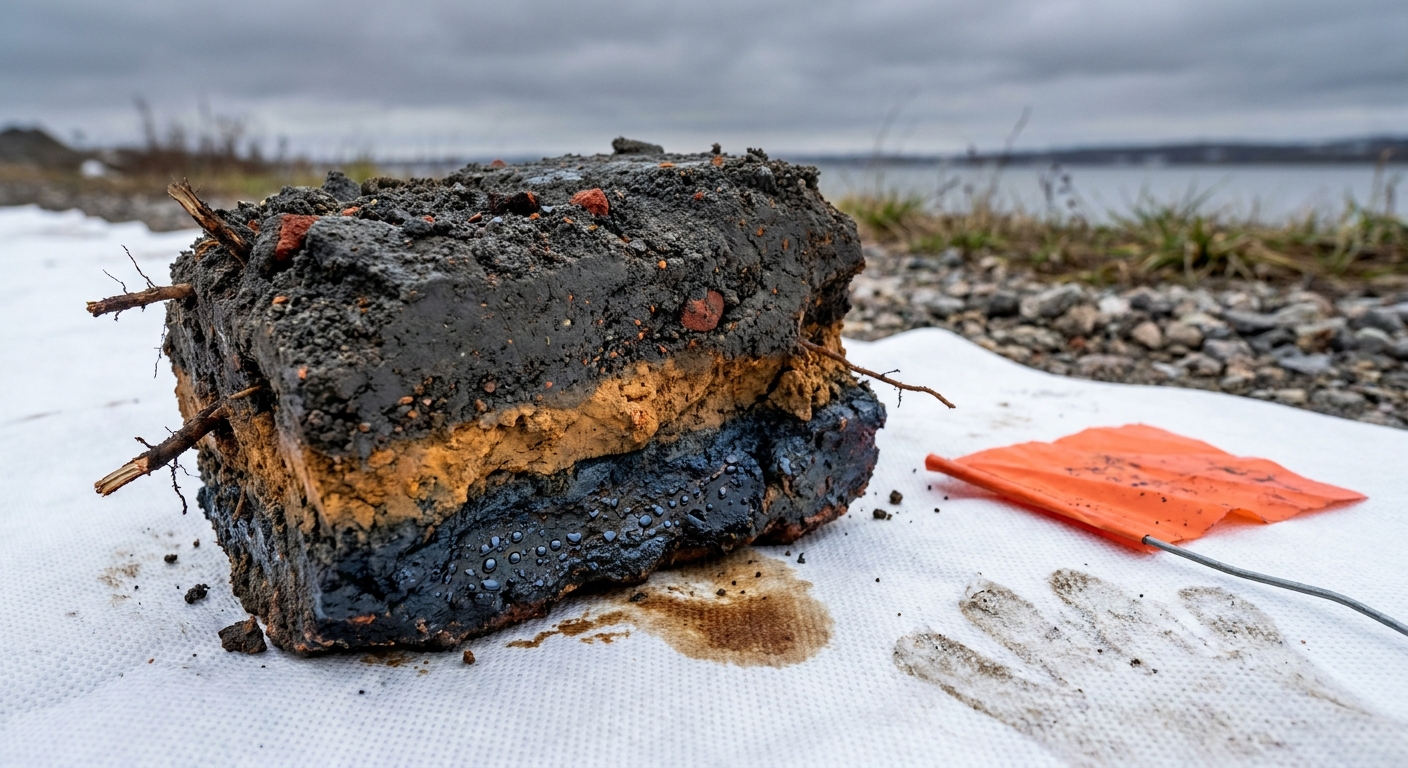
Ohio is accepting applications for roughly $120 million in Brownfield Remediation Program grants, and the clock is ticking: proposals are due Sept. 11 at 5 p.m., just two weeks away. For a city whose contaminated industrial parcels have blocked lakefront access and economic renewal for years, the funding represents one of the clearest shots Euclid has had to finally address legacy sites along Lake Erie.
The grants, drawn from a $200 million FY 2026–2027 allocation under House Bill 96, are designed to help communities clean up contaminated properties and prepare them for redevelopment. "The Brownfield Remediation Program is a powerful tool for communities across the state to give old or abandoned properties a vibrant new life," Gov. Mike DeWine said. He urged local governments to "take advantage of this program to turn abandoned or blighted properties into new, useful projects."
The program, created by the DeWine-Husted administration in 2021, has already moved significant dollars through the region. In the FY24/25 cycle, Ohio awarded $319,457,425 across 192 cleanup and remediation projects and 126 assessment projects as of Dec. 6, 2024. Demand far outstrips supply: on the first day of one application window, the state received $251,290,588 in requests.
What It Takes to Win
Eligible applicants include counties, townships, municipal corporations, port authorities, conservancy districts, park districts, county land reutilization corporations, and for-profit organizations. The site itself must meet Ohio's brownfield definition: an abandoned, idled, or under-used industrial, commercial, or institutional property where redevelopment is complicated by known or potential releases of hazardous substances or petroleum.
To qualify for a cleanup award, a project site must be fully assessed and access established by the time of application. Submissions must include a Remedial Action Plan that clearly identifies the cleanup standard to be achieved, and the applicant must sign a Clean Hands Affidavit confirming that neither the applicant nor an eligible partner caused or contributed to the contamination.
No matching funds are required for the FY 2026 program, though matching contributions will be considered in merit-based scoring. That rubric prioritizes readiness (32 points), economic impact (29 points), local support (24 points), and geographic distribution (15 points). Readiness scoring evaluates whether the project can start quickly—site control, zoning and permitting, financing, professional services, and a realistic timeline all factor in. Economic impact measures jobs, private investment, tax revenue gains, and broader regional growth.
Euclid's Track Record—and Open Questions
Euclid has tapped the program before. The former GE Lighting factory site at 21800 Tungsten Road received $4.5 million in state brownfield funding plus $600,000 in Cuyahoga County matching funds for redevelopment as Tech Park 90, a 434,000-square-foot industrial warehouse and light-manufacturing project.
Other Cuyahoga County projects offer a sense of scale: the Centennial project received $10,000,000 in brownfield remediation funding in December 2024, and the West Side Market received $1,286,604 in October 2024. The U.S. EPA also awarded $500,000 in assessment grants to the Cuyahoga County Land Reutilization Corporation in 2026 to conduct Phase I and Phase II environmental assessments, develop cleanup plans, and support community engagement for brownfield sites in Cleveland and East Cleveland.
The city has been actively assembling parcels for redevelopment. In early 2026, Euclid's Community Improvement Corporation issued an RFP for the former St. Robert Church site at 23802 Lake Shore Boulevard, seeking predominantly owner-occupied residential development. Mayor Kirsten Holzheimer Gail called it "a transformative redevelopment project" that "promises to bring new, modern housing stock to Euclid." On March 2, 2026, City Council approved transferring several city-owned parcels to the Community Improvement Corporation to support that effort and adjacent properties. As recently as Aug. 11, the CIC voted to accept title to a vacant lot at 115 East 206th Street from the city's land reutilization program for infill home construction through the Open Door Euclid program. Euclid's Land Reutilization Program continues to acquire vacant land and structures for redevelopment consistent with the city's Master Plan, with parcels reviewed by the Land Bank Review Committee before disposition.
The Lakefront Question
What remains unclear is whether any of these parcels—or other contaminated sites—are being packaged for the Sept. 11 deadline. The scoring rubric's heaviest weight falls on readiness, which means a competitive application needs completed environmental assessments, a remedial action plan, and site control already in hand.
Mayor Holzheimer Gail has spoken repeatedly about the stakes. "Lake Erie is one of our greatest assets as a city," she said. "As we try to redevelop our city we really want to focus on the lakefront, which is unique to Euclid." In a separate interview, she added: "We've been working on opening up our access to the waterfront for years, depending on who you talk to, decades. The goal is for people to come down, enjoy the lake, see a sunset, come walk on the trail."
Successful brownfield cleanup applications could remove the contamination barriers that have kept those lakefront parcels locked away from public access, housing, or commercial use. Cleanup would also unlock the economic impact metrics—jobs, private investment, tax revenue—that the state's scoring rubric rewards most heavily after readiness.
The Euclid Shore Sentinel reached out to Mayor Holzheimer Gail and Planning and Development Director Patrick Grogan-Myers to learn whether the city has identified priority sites and plans to apply by the Sept. 11 deadline; no response was received by publication time.
With two weeks left and demand historically running more than double the available funding, the question for Euclid isn't whether the money exists—it's whether the city is ready to go get it.