Public Safety & Courts
Cuyahoga County Common Pleas Court Expands Mental Health and Addiction Treatment Programs — What It Means for Euclid Residents
By Staff · July 17, 2026
For Euclid families watching a loved one move from a mental health or addiction crisis to arrest, release and another arrest, Cuyahoga County's recovery-court graduations offer a concrete but limited promise: treatment and court supervision instead of another turn through jail. In June 2026, Cuyahoga County Common Pleas Court recognized 11 Drug Court participants, six Recovery Court graduates, 11 Veterans Treatment Court graduates and four people completing its inaugural Mental Health/Addiction Treatment program.
For Euclid residents whose family members cycle through the criminal justice system due to substance use or mental illness, the central question is whether someone arrested on this side of the county can actually access these downtown Cleveland programs—or whether geographic, procedural, or capacity barriers keep eastside defendants locked into traditional prosecution and repeated incarceration.
Cuyahoga County Court of Common Pleas operates several specialty dockets in 2026, including the Mental Health and Developmental Disabilities Court, the BJA Grant Court for high-risk substance use disorders, and the FACT Grant Court for offenders with significant mental health disorders using Assertive Community Treatment. These programs focus on early identification, clinical assessment, and linkages to treatment services rather than traditional punishment, aiming to reduce recidivism and hospitalizations.
The FACT Docket held its inaugural graduation ceremony on June 16, 2025, with three individuals graduating. The court held its inaugural Mental Health/Addiction Treatment graduation in June 2026, marking four participants completing the integrated program.
Cuyahoga County secured a $2 million Department of Justice Office of Justice Programs grant in October 2024 to expand the Violence Intervention Program—first piloted as a specialty court in 2020—into a full specialty docket for 17-year-olds and 18- to 26-year-old felony offenders, using dedicated judges, probation officers, trauma-informed counseling, and peer mentoring.
In 2021, Cuyahoga County drug court programs admitted 83 people and graduated 70, representing approximately an 84 percent graduation rate—well above the statewide average of 57 to 59 percent for Ohio specialized dockets including drug and mental health courts. The Cuyahoga County Diversion Center, which supports many drug court participants, had 942 intakes in 2025.
For felony defendants, the path leads downtown. If a defendant in Euclid is charged with a felony, the case is initially handled in Euclid Municipal Court for an arraignment or preliminary hearing; if probable cause is found, the case is sent to the Cuyahoga County Court of Common Pleas for final disposition. The general timeline from arrest to appearance in Common Pleas Court, where Drug Court is housed, is estimated at 30 days.
Defendants are identified for Mental Health and Developmental Disabilities Court eligibility through Municipal Court Bind Over liaisons, attorney referrals with diagnostic access, or referrals from Common Pleas judges or probation officers to the Court Psychiatric Clinic. To qualify, an offender must have a confirmed severe mental illness with psychotic features (such as schizophrenia, schizoaffective disorder, or bipolar disorder with psychotic features) or a developmental disability with an IQ of 75 or below, verified by a mental health professional within the last 12 months. Participation is voluntary, requiring the defendant to sign a Participation Agreement before admission.
Adults must volunteer for Drug Court, have a moderate-to-severe substance use disorder, and be capable of completing conditions; those clinically eligible for the Mental Health and Developmental Disabilities Court are excluded from Drug Court.
The Cuyahoga County Court Psychiatric Clinic, located at 1200 Ontario St., Floor 6, Cleveland, conducts evaluations to determine eligibility for the Mental Health Court Docket and other programs. The Mental Health Unit is located in Tower II, 4th Floor West of the Justice Center in Cleveland.
The court does not publish case-flow data broken down by municipality of arrest or residence, so Euclid residents cannot determine from public records whether the recovery courts serve eastside communities equitably or concentrate resources on cases originating closer to downtown Cleveland.
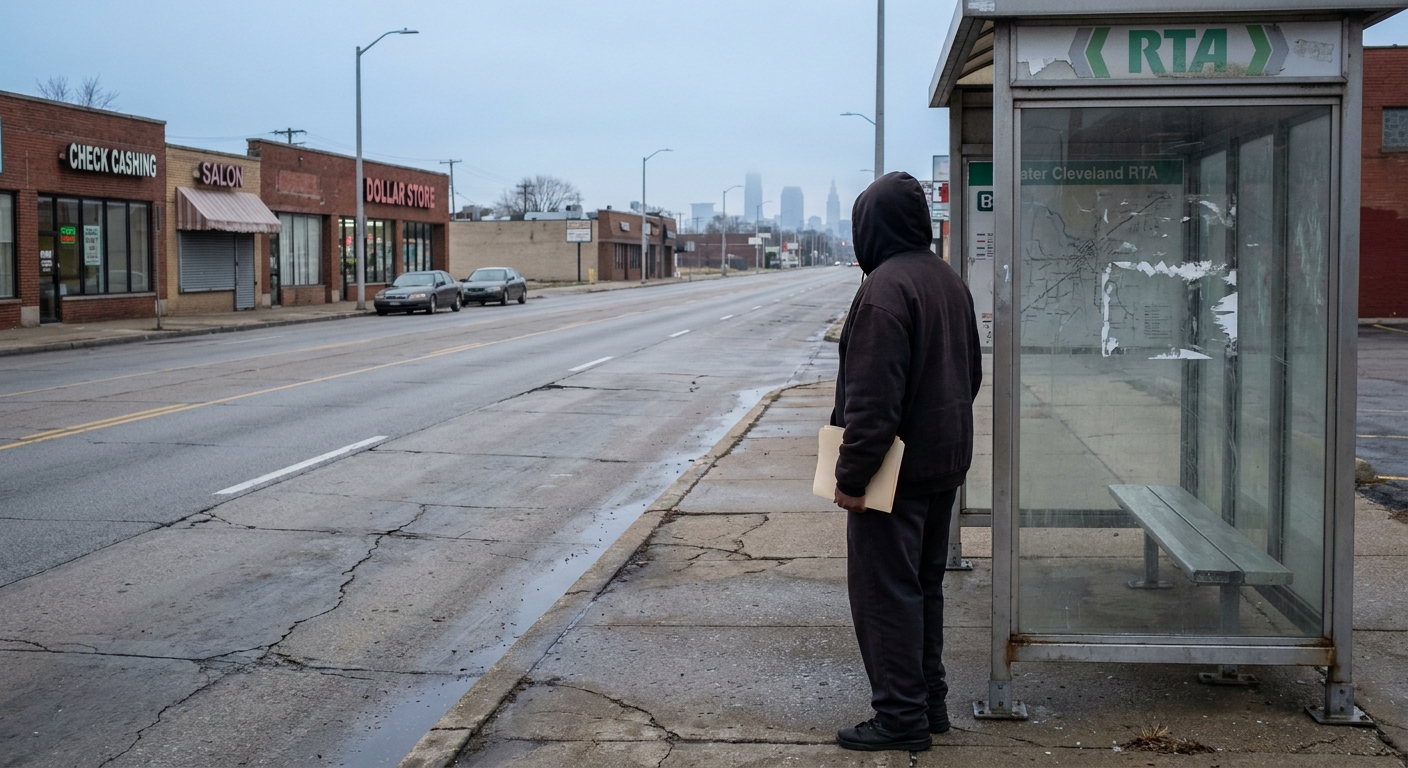
Getting into a program is only one hurdle. Staying in one can mean repeated trips downtown while trying to hold onto work, housing and treatment. Specialty docket participants must appear regularly at the Justice Center in downtown Cleveland for status hearings, compliance reviews, and treatment progress assessments. For a Euclid resident without a car, attending mandatory court sessions and treatment appointments can require multiple bus transfers and hours of travel each week—a burden that intensifies when someone is also required to maintain employment and stable housing as conditions of the program.
The court encourages using RTA buses or rapid trains, noting that multiple bus routes stop right outside the Justice Center and trains disembark nearby at Tower City. External transportation services from entities such as the Ohio Department of Mental Health and Addiction Services and local health providers are also available to help participants reach treatment.
The Re-Entry Court centers its programming on specific client needs, including housing, education, employment, and treatment for substance abuse and mental health, with stable housing identified as a critical factor for success after release. Mental illness, substance abuse, post-traumatic stress disorder, and lack of housing are primary factors acting as barriers to program completion.
For Euclid residents facing a felony case, the pathway is real, but it requires early action. Euclid Municipal Court is located at 555 E. 222nd St., Euclid, and handles misdemeanor criminal charges, traffic violations, and city ordinances before felony cases are transferred to Cuyahoga County Common Pleas Court.
Defendants or their attorneys can request referral to the Cuyahoga County Court Psychiatric Clinic for a mental health evaluation to determine eligibility for specialty dockets; the clinic can be contacted at 216-443-7337. Adult Drug Court intake inquiries can be directed to Drug Court Coordinator Molly Leckler at 216-443-2154 or [email protected]. Cuyahoga County Common Pleas Court maintains official information on specialty courts and programs at cp.cuyahogacounty.us.
For families in Euclid, the graduations are evidence that the county's treatment courts can be more than a ceremonial promise. But access depends on a referral, a qualifying diagnosis or substance-use assessment, and the ability to keep meeting demands centered downtown. Until the court shows who is reaching those programs from communities such as Euclid, each graduation answers only part of the question: whether the alternative to another jail stay is available when a local family needs it most.