State News
Ohio Governor's Race Hits Dead Heat, Putting Euclid's Policing and Surveillance Debates on the Statewide Ballot
Four recent polls show the race in a statistical tie, with both candidates staking out positions on qualified immunity and AI surveillance that directly affect Euclid residents.
By Staff · August 31, 2026
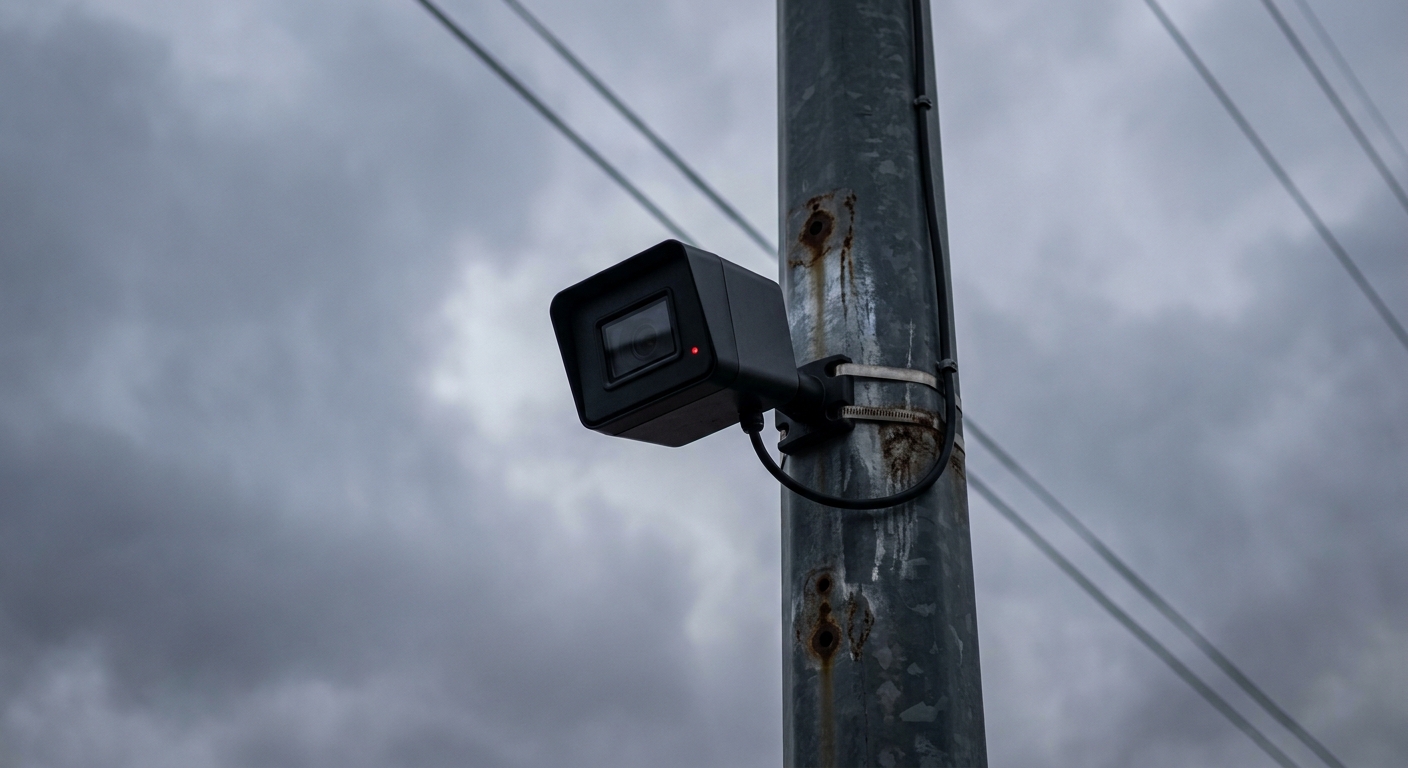
The Ohio governor's race between Democrat Amy Acton and Republican Vivek Ramaswamy has tightened to a statistical tie, upending expectations of a Republican runaway and turning policing policies already contested in Euclid and Cleveland into a central campaign flashpoint.
Four recent polls tell the same story: neither candidate can break away. A Wedgewood Polls survey showed Acton at 47 percent and Ramaswamy at 46 percent. A Bowling Green State University poll had Ramaswamy at 48 percent, Acton at 47. An AARP poll gave Acton a three-point edge, 47 to 44. A Fox News poll conducted August 6–10 showed Ramaswamy at 50 percent and Acton at 48. In July 2026, the Cook Political Report moved the race from Lean Republican to Toss Up, citing competitive polling and concerns within the GOP about Ramaswamy. By late August, Newsweek reported that prediction markets Polymarket and Kalshi had shifted to favor Acton, pricing her in the mid-50 percent range and Ramaswamy in the mid-40s.
The shift is stark. Ramaswamy won the Republican primary with Donald Trump's backing and was widely expected to cruise to the governor's mansion. Instead, a Columbus Dispatch opinion column described a contest far more competitive than a predicted "cakewalk," interpreting intensifying Republican attacks on Acton as a sign of GOP worry rather than confidence.
Acton Backs Qualified Immunity, Defends Flock Cameras
The sharpest policy contrast emerged in late August, when the Ohio Patrolmen's Benevolent Association, the state's second-largest police union, endorsed Acton, citing her support for collective bargaining rights and stronger pension protections for police and fire personnel.
At the endorsement event, Acton announced she opposes a ballot effort to end qualified immunity for police. "I support qualified immunity for law enforcement," she said, arguing that officers need protection from personal civil lawsuits. The Ohio Coalition to End Qualified Immunity is petitioning to place a constitutional amendment on the November 2026 ballot that would strip those protections from police and other government employees; the campaign must gather 413,487 valid signatures to qualify.
Acton also defended Flock surveillance cameras, saying she would order a comprehensive review of AI-powered surveillance tools while praising crime-solving technology and acknowledging privacy concerns. She pledged not to direct local police to stop cooperating with federal immigration enforcement — a position that helped secure the union's backing.
What It Means in Euclid and Cleveland
For readers in this market, the candidates' stances aren't abstract. Euclid Police Department operated 26 Flock Safety automated license plate readers as of April 2024, storing data for 30 days. Cleveland has run about 100 Flock cameras since 2023. The cameras capture the license plate, color, make, and model of passing vehicles; Cleveland police have said they do not record audio, use facial recognition, or identify drivers or passengers.
Euclid police are among the agencies that most frequently search Cleveland's Flock system, illustrating how data flows across jurisdictions. In July 2026, Cleveland added restrictions limiting Flock data access to Cleveland only and cutting off some outside-agency access.
The technology is facing pushback well beyond Northeast Ohio. At least 23 jurisdictions nationwide have canceled contracts or rejected Flock cameras amid concerns over privacy, data security, and possible constitutional violations. In August 2026 alone, Oxford's City Council voted to terminate its Flock contract after residents raised privacy concerns, and protesters gathered outside Hamilton City Hall to demand removal of the cameras. A Clermont County grand jury declined to indict an Ohio man charged with felony vandalism for allegedly destroying a Flock camera, leading to dismissal of the charges. Meanwhile, a 2025 Ohio budget provision exempts images and data from automated license plate recognition systems from public records, a move the Cincinnati Enquirer documented as Flock cameras spread to nearly every corner of the city.
Ramaswamy Warns of 'Chinese-Style Surveillance State'
Ramaswamy has staked out different ground. Asked about Flock cameras, he warned against a Chinese-style surveillance state. "If the government is able to map out every movement you make … it's not hard to imagine a Chinese-style surveillance state," he said, framing the issue as one of civil liberties and government overreach. Signal Cincinnati reported that both candidates have taken skeptical stances toward Flock cameras, though neither has called for an outright ban.
The policing split extends to endorsements. While Acton secured the OPBA, the Ohio Fraternal Order of Police — the state's largest police union — endorsed Ramaswamy. So did the Cleveland Police Patrolmen's Association. Andrew Gasiewski, president of the Cleveland association, framed the choice bluntly: "Vivek Ramaswamy understands the challenges our members face. He's committed to fully backing Police and Fire, protecting pensions from cuts, and defending qualified immunity. That's why we proudly endorse Vivek Ramaswamy for governor."
National Backers, Dueling Ads, and the Final Stretch
Vice President J.D. Vance endorsed Ramaswamy at an Ohio rally, calling him "a great friend" and saying he "would make a great governor." The NFIB Ohio PAC added its support, giving Ramaswamy a prominent small-business endorsement.
Acton, who got a late start on television compared with Ramaswamy and allied groups, launched a new ad emphasizing lower costs and a willingness to work across party lines. She said Ramaswamy has spent more than $50 million on attack ads she calls "lies and ridiculous and cruel." The Toledo Blade editorial board endorsed her anti-corruption plan, bolstering her effort to center the campaign on ethics and transparency.
On the broader platform, the two offer familiar partisan divides. Acton emphasizes reducing costs for Ohio families, cleaning up corruption, improving education, lowering healthcare costs, growing jobs, standing up for workers, building safer communities, ensuring reproductive freedom, and aging in place. Ramaswamy emphasizes tax cuts, lower energy costs, stronger schools, public safety, and reducing government waste, with a plan to make Ohio income-tax-free over 10 years.
With two months to go and the race locked in a dead heat, the question for Euclid and Cleveland-area voters is pointed: Acton is defending the surveillance tools and legal shields already operating in their neighborhoods, while Ramaswamy is casting those same systems as a threat to civil liberties. Which framing prevails may determine not just who governs Ohio, but how aggressively these technologies expand next door.