State News
Ohio Shuts Down Four Fracking Waste Wells Over Water Contamination Fears—What It Means for Lake Erie Communities
By Staff · July 17, 2026
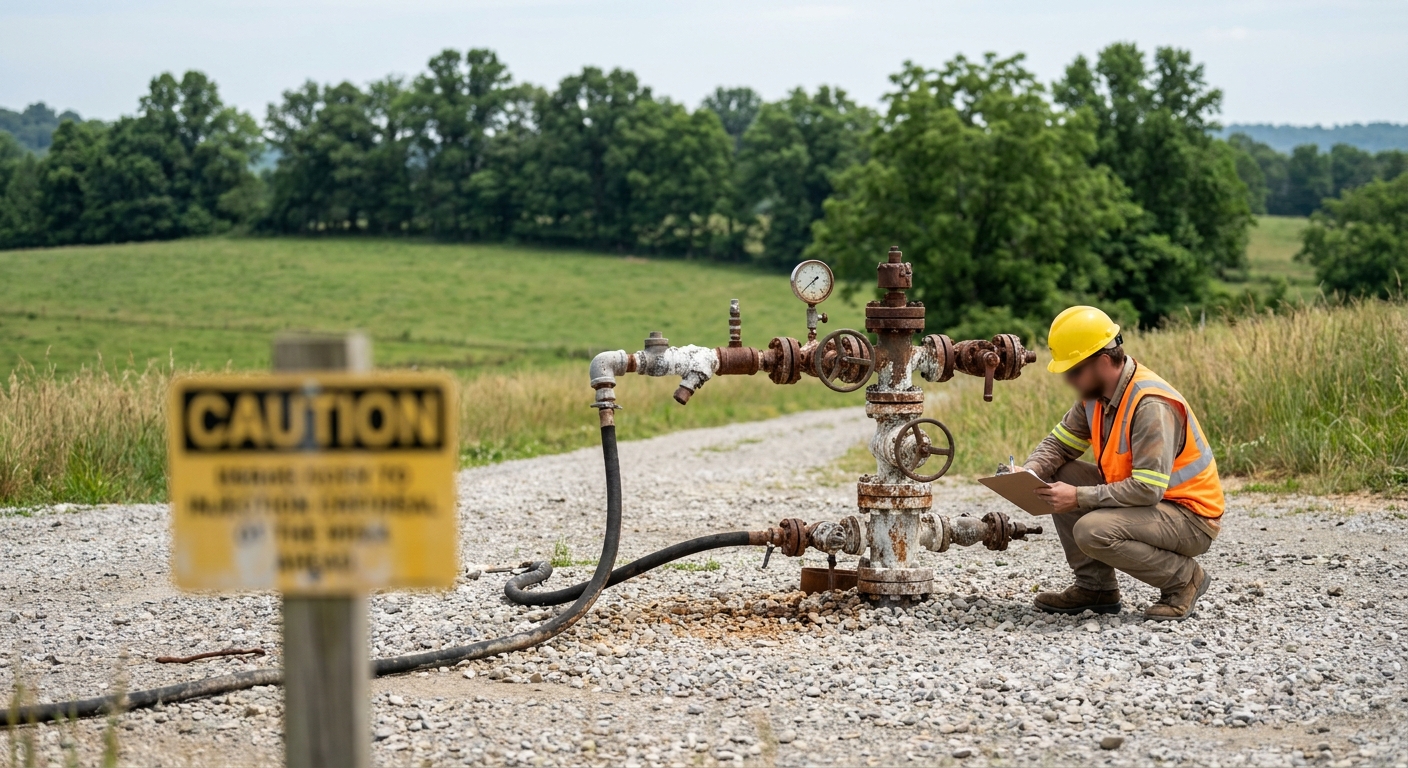
Four Class II injection wells in Washington County stopped taking fracking waste on July 1 and 2 after the Ohio Department of Natural Resources Division of Oil and Gas Resources Management asked their operators to halt operations. The state suspects that wastewater pumped underground may be moving beyond its intended disposal zone and affecting nearby oil and gas production wells. ODNR is now finalizing a contract with a third-party consultant to test private water wells nearby for possible brine contamination.
For Euclid, where municipal drinking water is drawn from Lake Erie through an intake about three miles offshore, the shutdown raises a pressing question: What proof can Ohio provide that similar disposal-well problems are being detected and contained before they threaten water sources closer to the lake?
A Six-Year Problem That Continues
The Washington County action centers on Redbird No. 4, Redbird No. 5, Nichols No. 1-A and American Growers No. 1. Redbird Development LLC owns the two Redbird wells, DeepRock Disposal Solutions LLC owns American Growers No. 1, and Select Water Solutions LLC owns Nichols No. 1-A. The four account for about 24% of Washington County's active Class II injection wells.
Redbird Development had already sealed the Ohio Shale formation at Redbird No. 4 on May 22, 2020, ending injections into that zone. An ODNR investigation report released in August or September 2020 found that brine from Redbird No. 4 had traveled through naturally occurring fissures between geologic formations, contaminating 28 production wells as far as five miles away. At that time, ODNR said the area's rock composition made it unlikely that the brine had reached underground drinking-water sources, and no adverse human health effects were reported. A 2021 study also found no brine contamination in water wells within a half-mile of Redbird No. 4.
ODNR barred new Class II injection-well permits in the Ohio Shale within 10 miles of Redbird No. 4 while further study continues.
On June 23, 2026, the Buckeye Environmental Network reported that brine migration from Redbird No. 4 was worsening, citing a pressure increase of more than 1,800% in a nearby production well. The upcoming third-party study will provide the first independent assessment of whether that migration has contaminated drinking-water supplies—testing ODNR's earlier conclusion against the more recent evidence that pressure has continued rising since 2020.
The wells are not permanently closed. Whether they can resume accepting waste depends on ODNR's investigation and on whether the state decides the migration concerns can be resolved.
What the Numbers Say About Lake Erie Watershed Risk
Euclid is served by the Cleveland Water system, specifically the Nottingham Water Treatment Plant.
Statewide, Ohio had 232 active Class II brine injection wells as of the second quarter of 2025. About 450 oil and gas wells—including production wells and Class II injection wells—were permitted across the Lake Erie Watershed between December 2008 and December 2021, but publicly available data do not break out how many of those are active injection wells or where within the watershed they are located.
The 11 counties with the least Utica/Class II activity sit along Lake Erie as well as Ohio's Michigan and Indiana borders, indicating very low injection-well activity in Cuyahoga County, Lake County and other lakefront areas compared with southeastern Ohio. Washington County had 17 active Class II wells in 2023, representing a concentration of injection-well activity in the southeast.
But low activity is not the same thing as a clear public accounting of risk. Neither ODNR nor Cleveland Water has publicly specified how many active Class II injection wells sit in counties immediately bordering Lake Erie's southern shore, what groundwater and surface-water monitoring ODNR requires for injection wells in the watershed, or whether the agency will assess Northeast Ohio risks with the same scrutiny now being applied in Washington County.
What Comes Next
Euclid residents and neighboring lakefront communities dependent on Lake Erie can press Cleveland Water, the Nottingham Water Treatment Plant and state officials for injection-well locations within the watershed, monitoring protocols specific to Lake Erie protections, and a commitment to independent study comparable to the one now underway in Washington County.